Quick answer
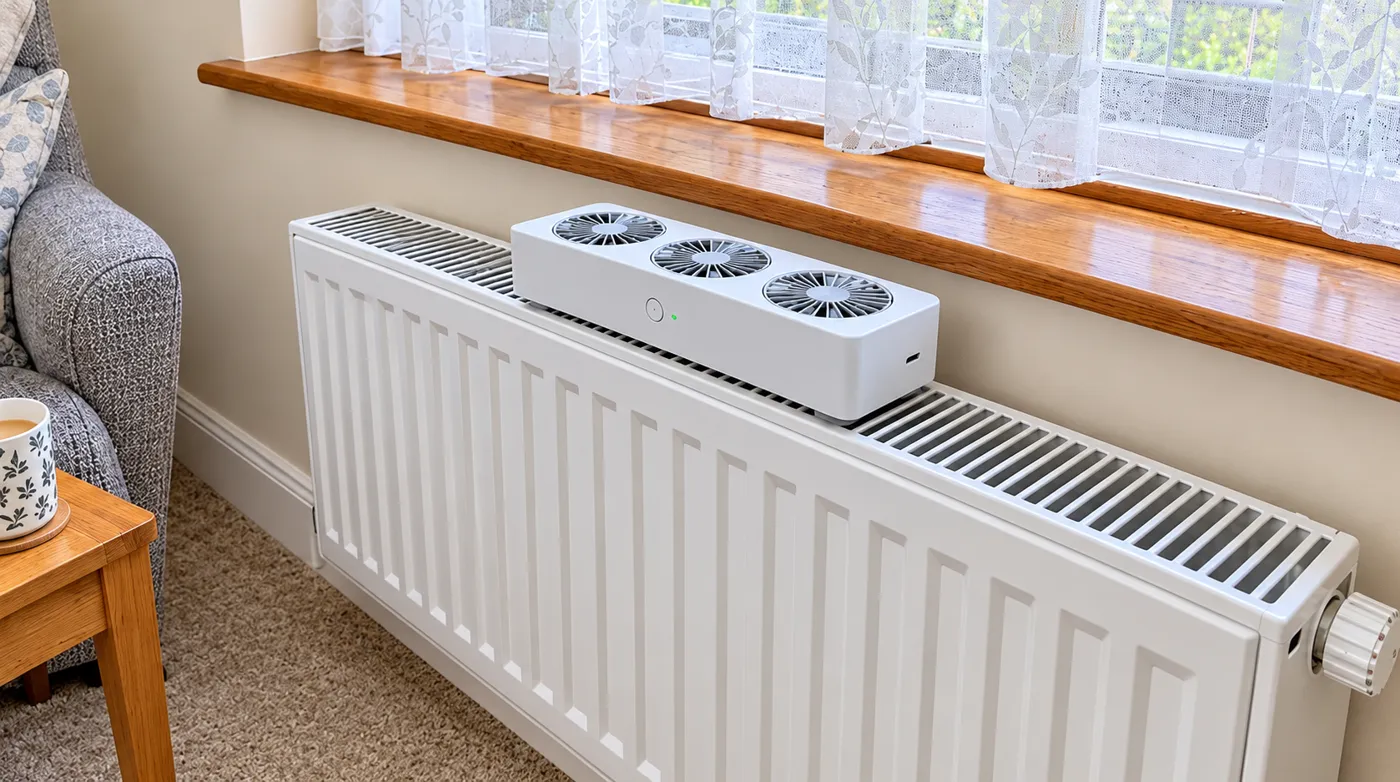
Our pick is Virra: three quiet fans, about 3 W from USB, it starts automatically and fits flat-topped UK panel radiators, with free UK delivery and a 30-day money-back guarantee. We make Virra, so use the checklist below to judge any radiator fan fairly.
Virra radiator fan from £79 · free UK delivery · 30-day money-back
Order nowThe 8-point radiator fan scorecard
Use this checklist on any radiator fan you're considering, including ours. A product that passes all eight is likely to be a sensible buy for a UK home.
| What to check | Why it matters | Virra |
|---|---|---|
| Fit | It must sit safely on your radiator type | Flat-topped UK panel radiators |
| Power use | Low watts means pennies to run | About 3 W |
| Noise | Matters in bedrooms and living rooms | 3 small quiet fans |
| Auto-start | No remembering to switch it on | Starts as the radiator warms |
| Fitting | No tools, no landlord permission needed | Sits on top, plug in USB |
| UK seller | UK pricing, delivery and support | Official UK store |
| Guarantee | Lets you try it at home safely | 30-day money-back |
| Price per room | Bundles should bring the cost down | From £53 each in a 3-pack |
Start with fit, not a league table
Best is a buying question, not an excuse to invent a winner from tests that have not happened. Begin with the radiator and the room you want to improve. A fan with attractive features is still the wrong choice if it cannot sit on your radiator as intended. Suitability is the first filter; price and convenience come after you have cleared it.
A shortlist built around your home is more useful than a broad ranking that mixes different fitting formats. This guide recommends a product on its stated features and suitability; it does not claim independent comparative testing, competitor scores or a universal winner for every radiator.
Official UK store
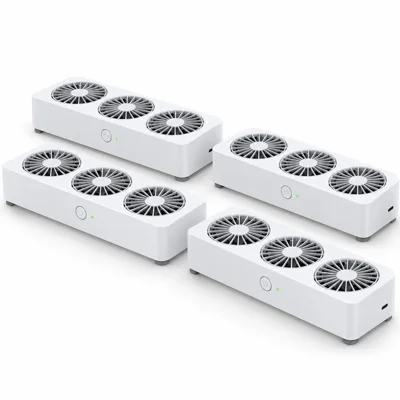
Virra triple-fan radiator booster
- Pushes radiator heat into the room
- Switches on by itself as the radiator warms
- Around 3 W from USB, nothing to install
£79 · from £53 each in bundles · free UK delivery
See prices & orderTypes of radiator fan compared
"Radiator fan" covers several different products. Choose the type before the brand.
| Type | How it works | Typical power | Best for |
|---|---|---|---|
| Top-mounted booster (like Virra) | Moves warm air off the top of the radiator | A few watts | Panel radiators that leave rooms uneven |
| Under-radiator fan | Pushes floor air up through the fins | Low, varies | Radiators with clear space beneath |
| Electric fan heater | Makes heat with an element | Often 1,000–2,000 W | Rooms with no radiator |
Compare the right kind of product
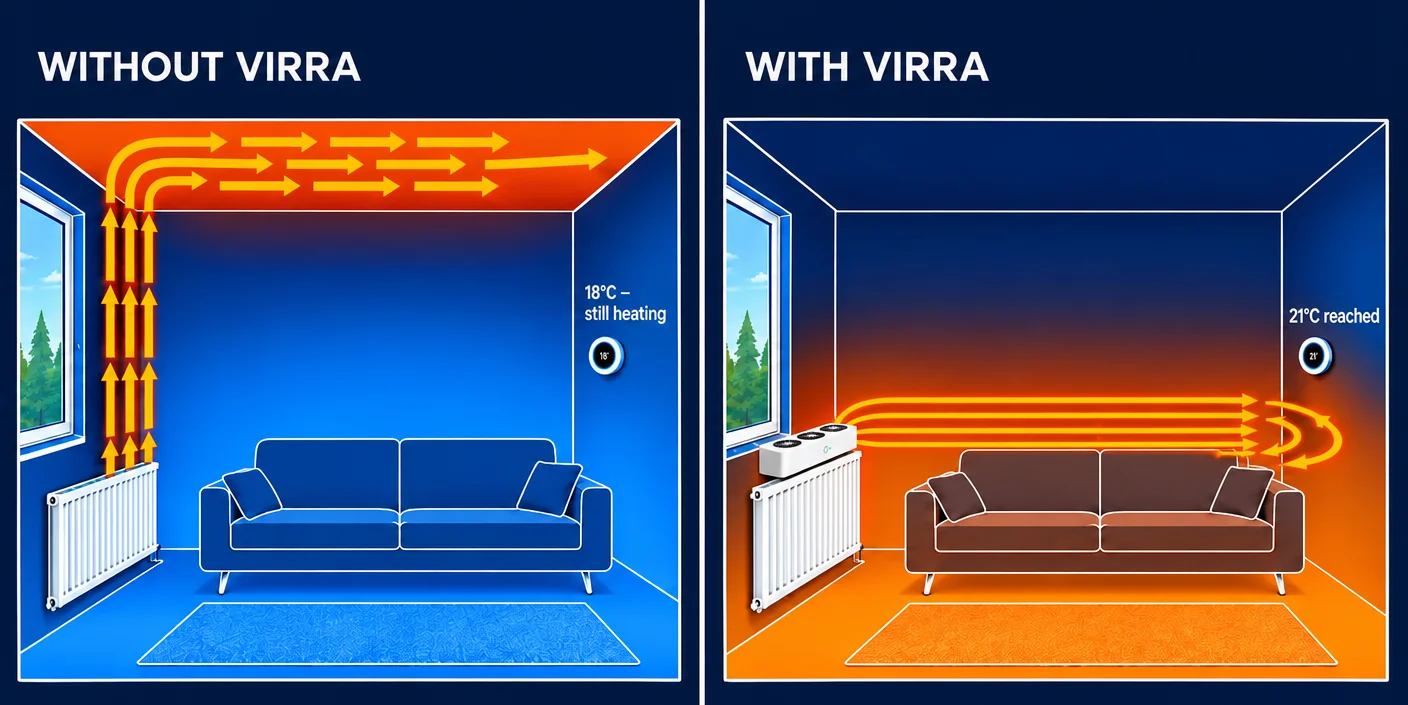
A radiator fan circulates air around an existing source of warmth. An independent heater supplies heat itself. Keep those categories separate when comparing products, otherwise a power figure can be misleading. Low wattage makes sense for a fan because it is not paying the electrical cost of generating room heat. You still need your central heating to warm the radiator.
Compare like with like and ask what job you want done. A fan accessory can be appealing if the radiator already supplies warmth but circulation feels uneven. It is not the same purchase as adding heating capacity to a room that has too little heat available.
Will it fit your radiator?
Works on
- Standard UK panel radiators (single or double)
- Radiators with a flat top or top grille
- Radiators under windows or on any wall
Not designed for
- Column or cast-iron radiators
- Heated towel rails
- Electric storage heaters
How many radiator fans do you need?
Our pick: Virra specifications
- Fans
- 3 quiet fans
- Power
- About 3 W via USB cable
- Starts
- Automatically as the radiator warms
- Fits
- Flat-topped UK panel radiators
- Installation
- None: place on top and plug in
- In the box
- Virra unit, USB cable, quick-start guide
- Guarantee
- 30-day satisfaction guarantee
Choose the features you will use
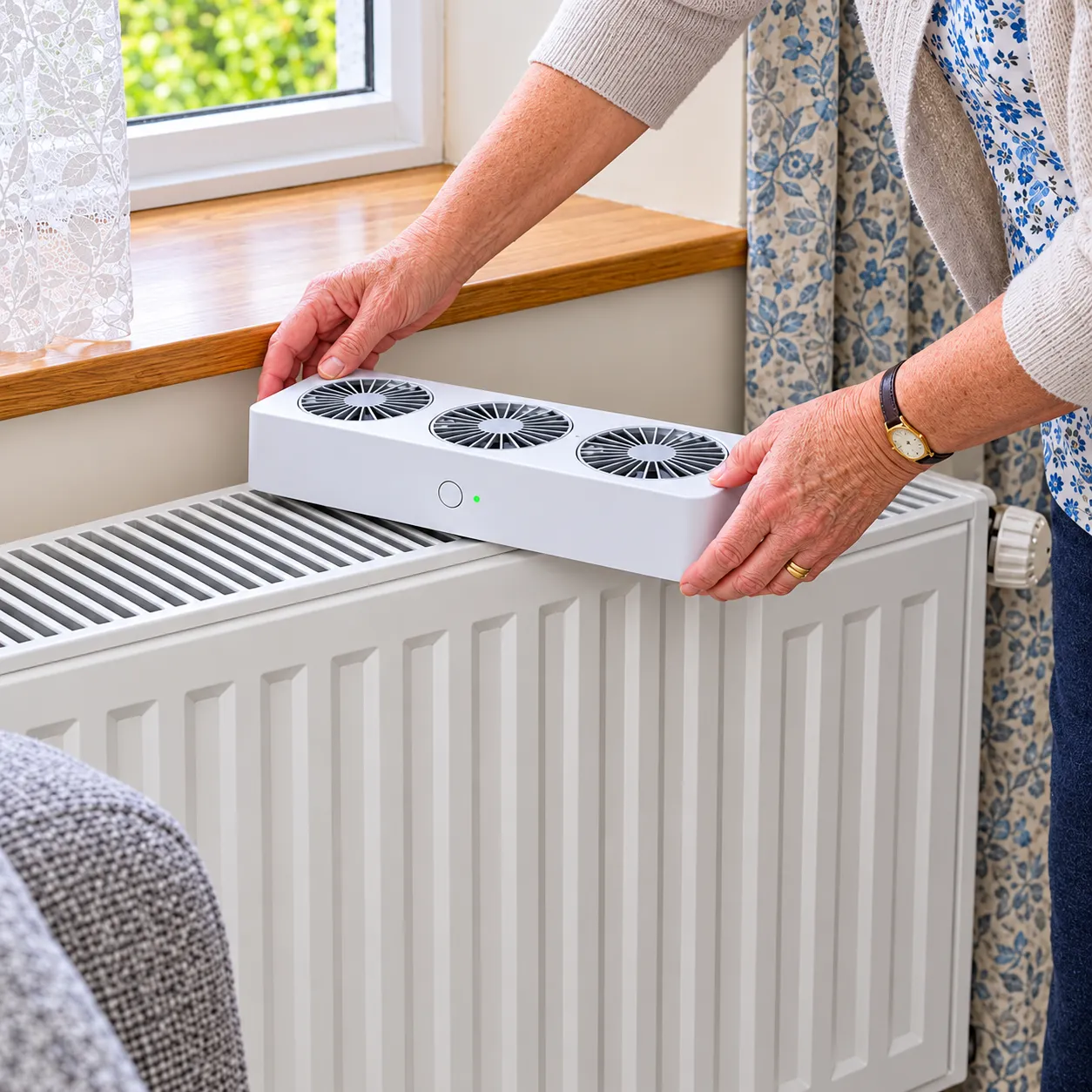
Useful features are those that remove effort from normal operation. Virra is a triple-fan booster that starts automatically as the radiator warms, connects by USB and needs no installation. These are straightforward facts to compare with your needs, not proof of an invented temperature advantage. Ask where the fan will sit, how it gets power and whether the setup fits your daily routine.
Automatic start is a convenience, while fan count describes the unit's design. Neither establishes a guaranteed comfort improvement by itself. Keep that distinction in mind when reading feature lists so useful specifications do not turn into assumptions about results no seller can know for your room.
Popular radiator fan brands people compare
These are the names UK shoppers most often search for alongside Virra. We haven't lab-tested other brands, so we don't publish their specs or prices here; check each seller's current listing for fit, power, guarantee and delivery, and compare them against the scorecard above. Our detailed comparison pages explain the questions to ask.
| Brand | What to check on the listing | Our guide |
|---|---|---|
| Smart Air Boost | Radiator fit, power source, UK guarantee | Virra vs Smart Air Boost (see Keep reading below) |
| HeatBoost Pro | Number of fans, power use, returns | Virra vs HeatBoost Pro (see Keep reading below) |
| Heat Hero | Fit and fitting method, UK delivery | Virra vs Heat Hero (see Keep reading below) |
| Radibooster | Under-radiator vs on-top design | Radibooster alternative (see Keep reading below) |
| SpeedComfort | Fitting method and price per room | Use the scorecard above |
Best radiator fan for every situation
- Best for one chilly room: a single Virra (£79) on the radiator you sit near most.
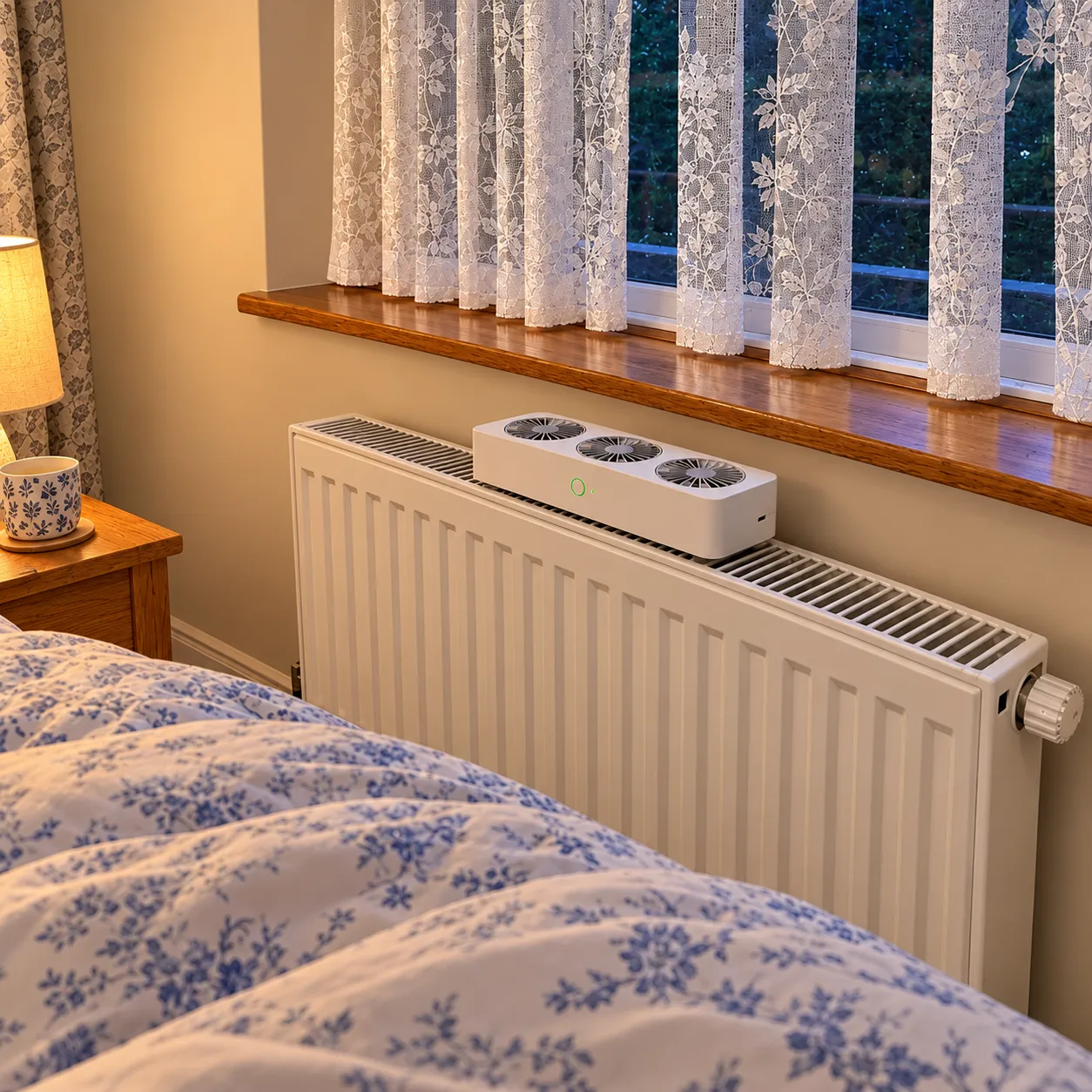
- Best for bedrooms: a quiet, low-power fan that starts by itself, which is how Virra is designed.
- Best for renters: no tools or fixings, so nothing to explain to the landlord; it simply sits on top.
- Best for the whole house: the 4-pack, or the 3-pack for the lowest price per unit (£53 each).
Read noise descriptions sensibly
A quiet fan may suit a living room or workspace without being inaudible in a still bedroom. Virra is described as quiet; there is no numerical noise claim here. Consider when you will use the room and how sensitive you are to background sound. Do not turn a vague promise of silence, from any listing, into the deciding factor without understanding what is actually stated.
Your own tolerance matters more than a dramatic adjective. There is no reason to invent a decibel measurement or claim that quiet means inaudible. A product that fits happily into daytime living may need a different judgement if you intend to use it beside a bed.
Check the complete power arrangement
Virra uses about 3 W through USB power. Before choosing a unit, map a safe route from the radiator to the power connection and follow the product instructions. Avoid a lead across a doorway or a cable pulled tight between furniture. The absence of installation work is a benefit, but it does not remove the need for a stable position and unobstructed airflow.
Check that nothing will cover the unit once it is in place. Curtains, drying clothes and radiator-top clutter can interfere with the setup. Disconnect power before handling or cleaning and follow the supplied care guidance. Practical use is an important comparison criterion, not an afterthought.
Judge costs on the same basis
At the example tariff of 25p/kWh, 3 W costs 0.075p an hour, below 0.1p. About £1 covers an example winter of eight hours daily for 165 days. That is a useful operating-cost comparison, not a heating-bill saving. Compare purchase price and fan electricity separately, and do not accept a payback calculation unless the saving behind it has a sound basis.
The cheapest apparent operation is not the whole purchase decision. A product must also fit, connect safely and have a useful role. For many households the upfront price deserves more attention than fractions of a penny per operating hour, especially if several units are being considered.
How many should make your shortlist?
You do not need a unit for every room simply to make a complete shopping list. Prioritise a frequently used room with a warm radiator and uneven comfort. Check each radiator: Virra is for flat-topped UK panel models, not columns, towel rails or storage heaters. Several suitable rooms can justify a bundle, while one clear location can justify starting with one.
One room is a legitimate starting point, not an incomplete installation. There is no requirement to put a fan on every radiator to try fan-assisted circulation. Choose quantities around the rooms you use most and the issues you actually want to improve.
What a radiator fan won't do
No sensible choice should be based on the idea that a fan generates extra heating energy. It moves warmth and cannot fix a cold radiator, repair the boiler or seal a draughty building. It cannot guarantee a lower bill, either. A realistic shortlist focuses on the job fans can do: assisting the circulation around an already working, compatible radiator.
First clear furniture and curtains from the radiator, then consider the remaining problem. If the radiator never warms during the heating period, address that before comparing fans. A good buying guide should help you avoid the wrong category of purchase as well as choose within the right one.
How we chose our pick
We're the team behind Virra, so we're not neutral, and we'd rather say so plainly. Our pick is based on the checklist above, which we think any fair buyer's guide should use: fit, power, noise, ease of use, UK support and the guarantee. We don't publish invented star ratings, test scores or savings figures.
If another radiator fan suits your radiators better, for example if you have column radiators, which Virra isn't designed for, that product is the better choice for you.
A final buying checklist in plain English
Check the radiator, clear the surrounding air path, plan the USB connection and choose a quantity with a purpose. Then buy through the official Virra website, the sole sales channel for Virra, rather than searching Argos, Screwfix or Amazon. A good choice does not need a made-up star rating. It needs a product that suits the room, transparent pricing and a practical way to decide whether it is right for you.
Keep heating settings familiar for the first uses and notice comfort in your usual seat. The 30-day money-back guarantee supports that judgement in the real room. Your best choice is a product that has a useful place in everyday life, not simply one that looks appealing on a comparison page.
Frequently asked questions
What is the best radiator fan in the UK?
The best one is the one that fits your radiators and passes the 8-point scorecard. For flat-topped UK panel radiators, our pick is Virra: 3 quiet fans, about 3 W, auto-start, free UK delivery and a 30-day guarantee.
Are radiator fans worth buying?
They can be worth it if your radiator heats properly but the room feels uneven, because they move warm air to where you sit. They can't fix a cold radiator.
What's the cheapest radiator fan to run?
Low-power USB fans cost very little. At about 3 W, Virra costs roughly 0.6p for 8 hours at around 25p per kWh.
Is a radiator fan better than a fan heater?
They do different jobs. A fan heater makes new heat using 1,000–2,000 W; a radiator fan spreads the heat you're already paying for using a few watts.
Do radiator fans work on column radiators?
Virra isn't designed for column or cast-iron radiators, towel rails or storage heaters. Check any product's fit list before buying.
Is Virra a tested winner over other UK fans?
This guide recommends Virra on its stated features and suitability for panel radiators. It does not present comparative testing, competitor rankings or invented scores.
Which radiator types are suitable?
When comparing UK choices, virra sits on flat-topped UK panel radiators. It is not for column radiators, towel rails or storage heaters; check each planned location before ordering.
How much does one cost to run?
When comparing UK choices, at about 3 W and an example 25p/kWh tariff, one costs 0.075p per operating hour. About £1 illustrates eight hours daily for 165 days; your hours and tariff determine the actual cost.
What should come first when comparing fans?
Radiator fit comes first, followed by a suitable power route, quiet operation that suits your room, everyday controls and the total purchase price.
Where can I buy Virra and which bundle is best value?
When comparing UK choices, buy only on the official website. Three for £159 is the best unit price at £53 each. Free UK delivery and a 30-day money-back guarantee are included with all bundles.
Choose your Virra bundle
Love it or get every penny back
Use Virra at home for up to 30 days. If your room doesn't feel warmer, or you simply don't like it, we'll refund you in full.
- Full refund, no questions asked
- Free UK returns label
- Refund to your card within 5 working days of the return arriving
- Your rights under the UK Consumer Rights Act 2015 are not affected
- Sold and supported by a UK team (email reply within 1 working day)
Secure checkout




About our guides: written by the Virra UK team using our own product details and general heating physics. We don't publish invented test results, savings figures or reviews. Results vary by room, radiator and insulation.